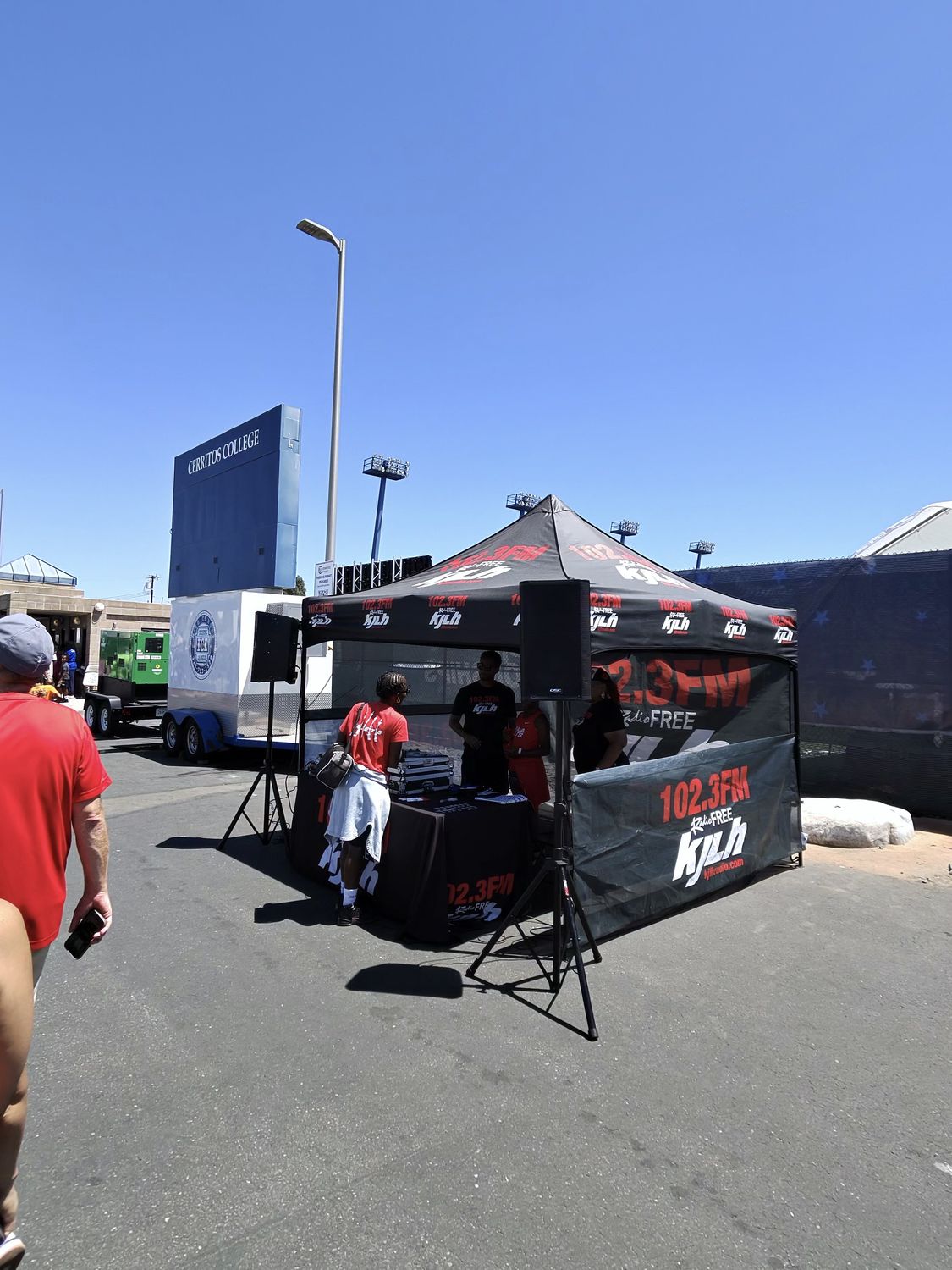
This guide is going to cover what to expect at a track meet, whether it's the Junior Olympics or a local Saturday meet. If you are planning on attending in the near future or next year, this applies to track meets throughout the nation. I hope this is helpful to someone out there so they can prepare to support their athlete.
I wanted to share a real sense of perspective on what to expect, whether it's for your own child, your own family member, or a friend. So let me shed some light on what to expect. That's the intention of this article.
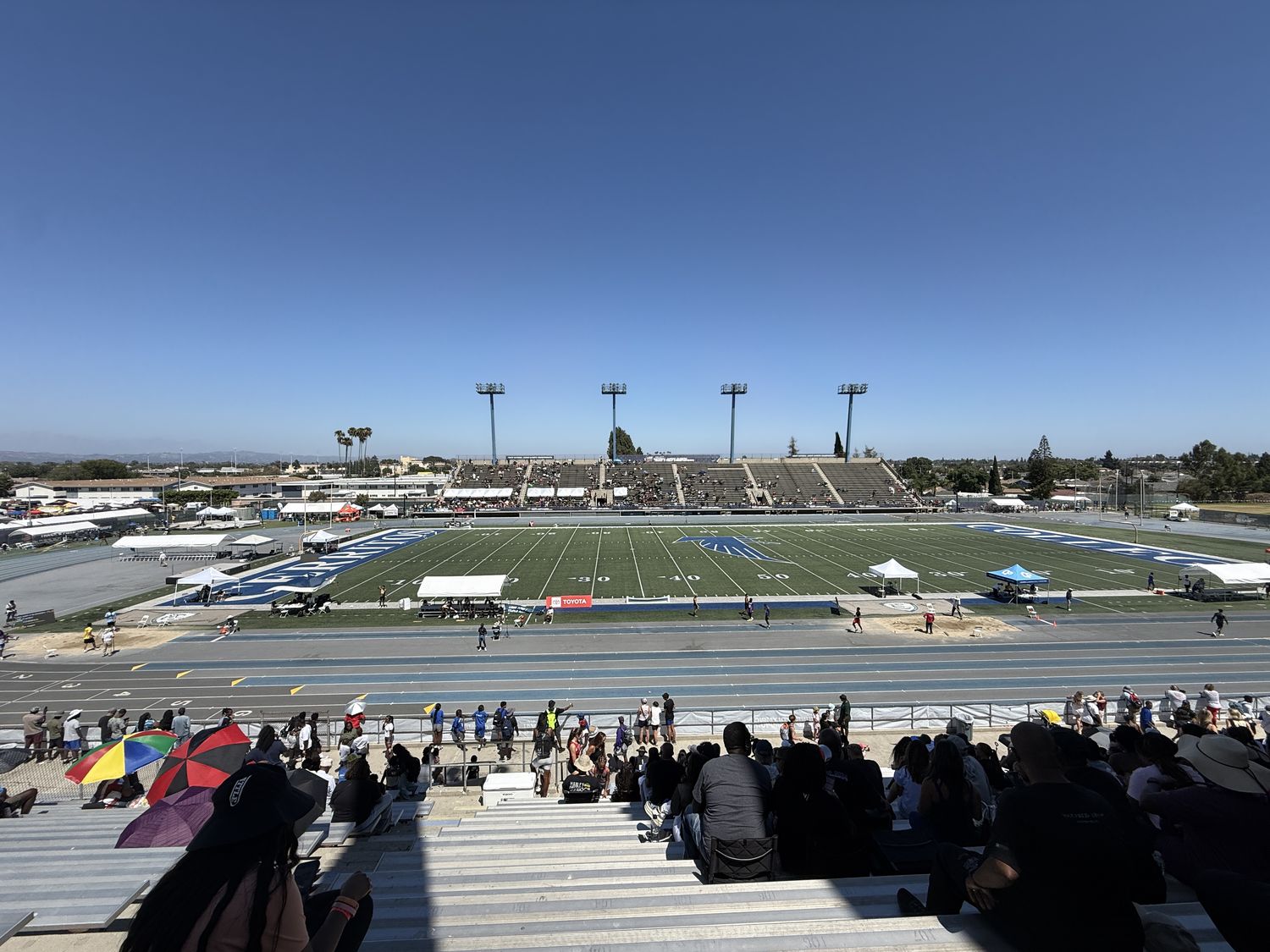
Spectator's Perspective
Let's focus initially on a spectator's perspective. We'll jump into the athlete perspective later. From a spectator's perspective, there are a few things you need to be aware of and take into consideration, beginning with shade.
Track meets can be long. Sometimes you have to wait an extensive period of time between heats, so shade and comfort is critical when you are out there supporting your athlete. Everybody's body reacts differently to heat. Shade is extremely important, especially if you have any issues with the heat or your body responds to it differently than others.
Parking
For the Junior Olympics this past year, the 2026 USATF Junior Olympics was held at Cerritos College. The parking situation over there is interesting because you can pay by the day, by the week, or by the month, and it's all digital. When you get there, bring lots of patience because you may be driving around for 15 or 20 minutes, sometimes longer, looking for a stall.
Even though you paid for your stall, people are trying to get as close as they can to the track and they're trying to get out of the sun. Sometimes people are just cooling off in the car. So just be prepared for that. Pack lots of patience, and when you drive around, be ready to be driving slowly.
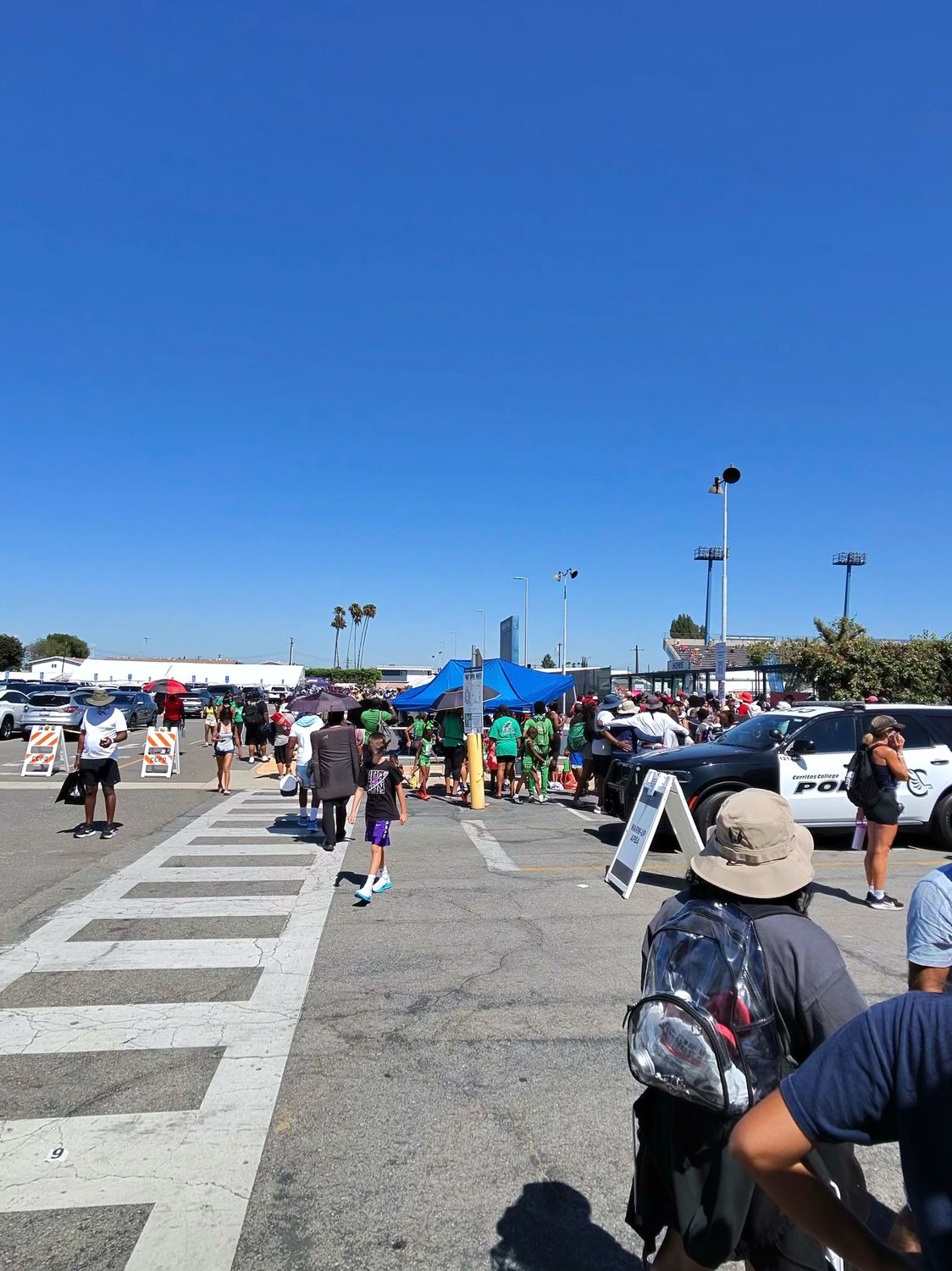
Please keep in mind that you want to stay away from the event gates because there's a lot of foot traffic over there. I've seen it happen where people step into the path of cars without realizing it. Everybody's focusing on their athlete, so it's something to be mindful of. They try to keep people away from the main gate entrance for that reason.
Wristbands
Do not take off your wristbands. It is very, very important. If you take off your wristband, you may have to purchase another admission. This is for USATF regulated and sanctioned track meets specifically. Other track meets may be different, but if you're going to a USATF Junior Olympics or a USATF sanctioned track meet, you don't want to take off your wristband.
It's really difficult to get another one and you may have to pay again. So if you came a long way, just do not take off your wristband. Security uses them to identify your access level, whether your pass is for the week, for the day, or whatever it is. Please do not take off your wristband. It's really critical.
Seating
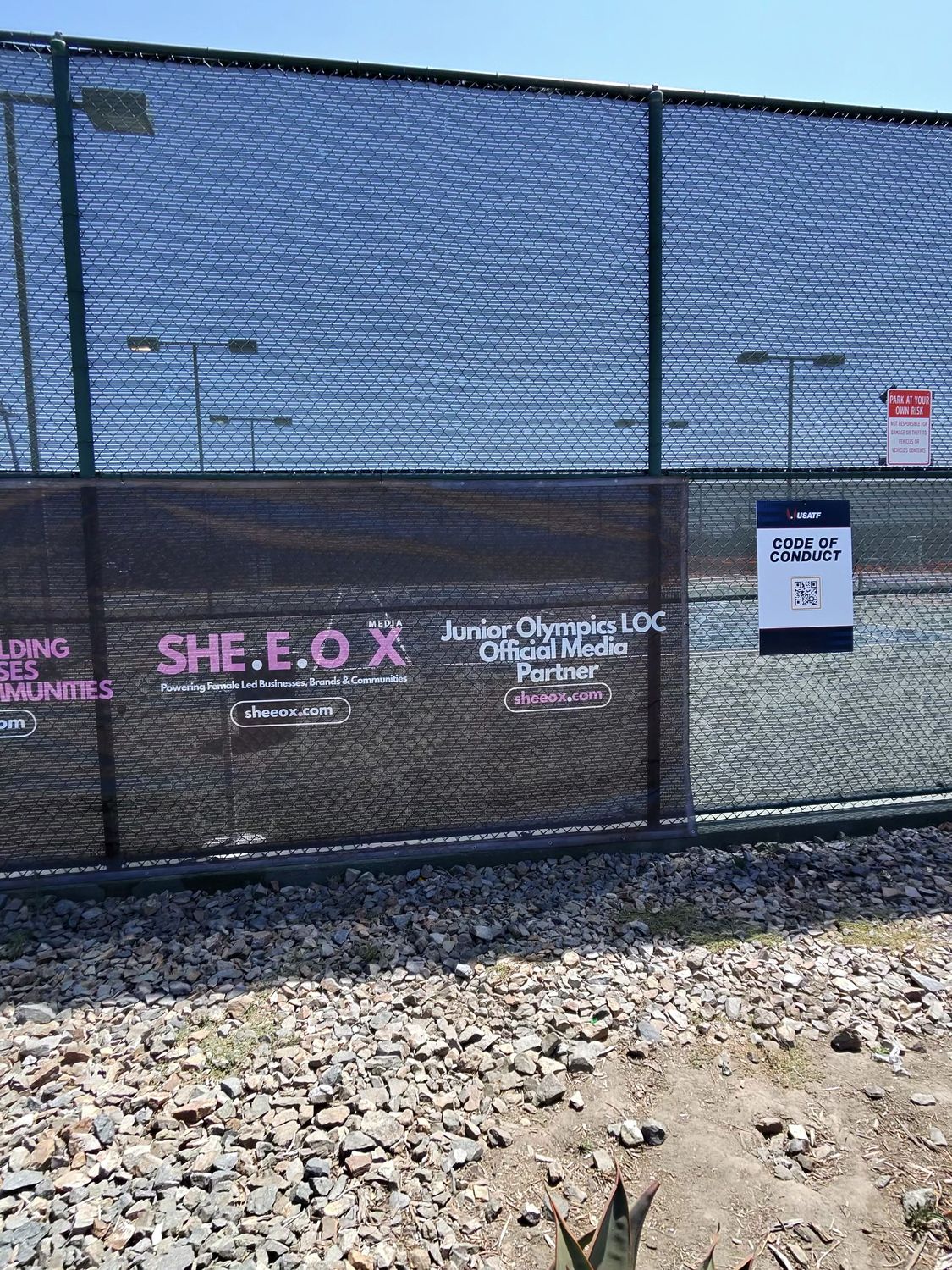
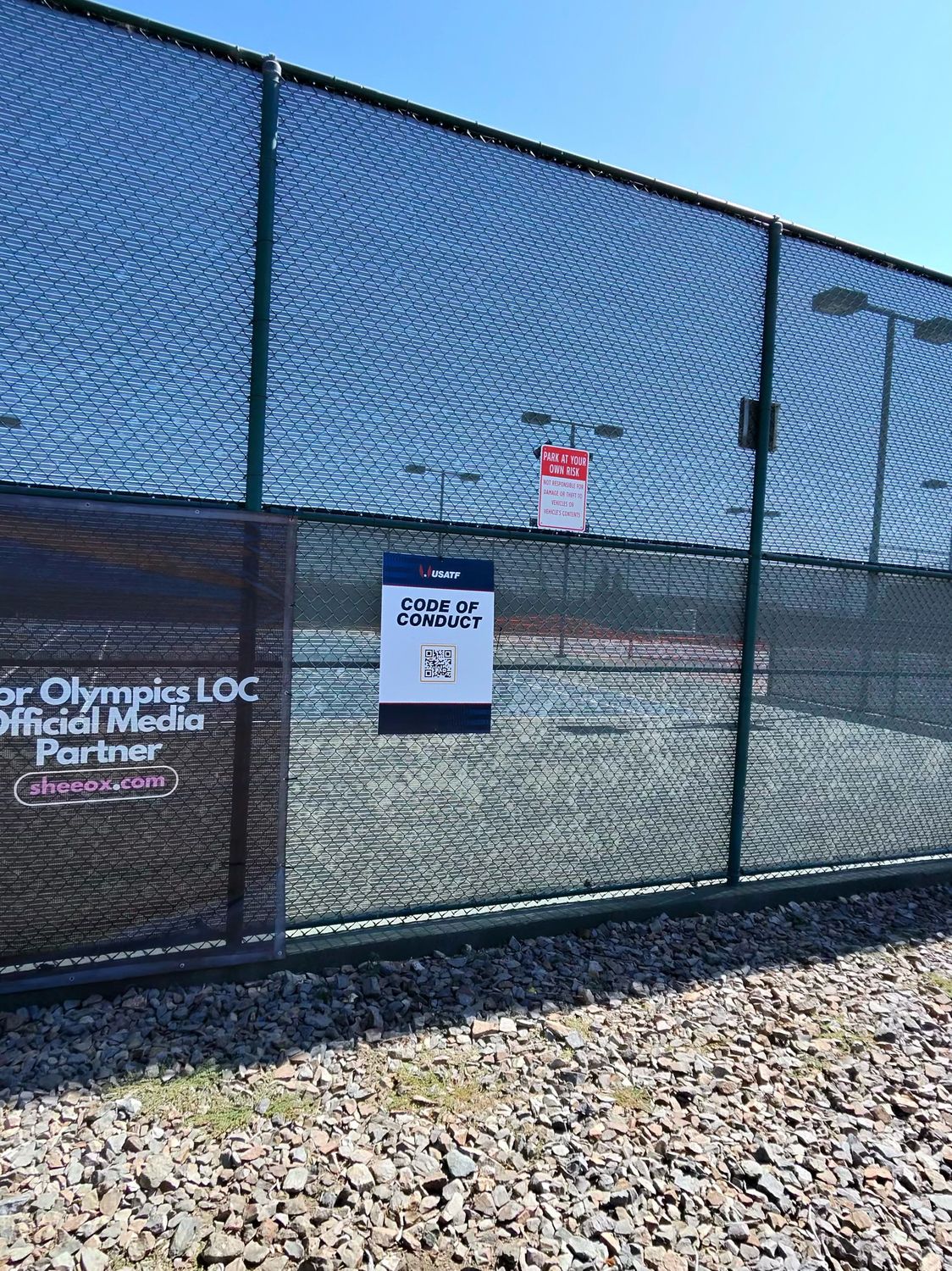
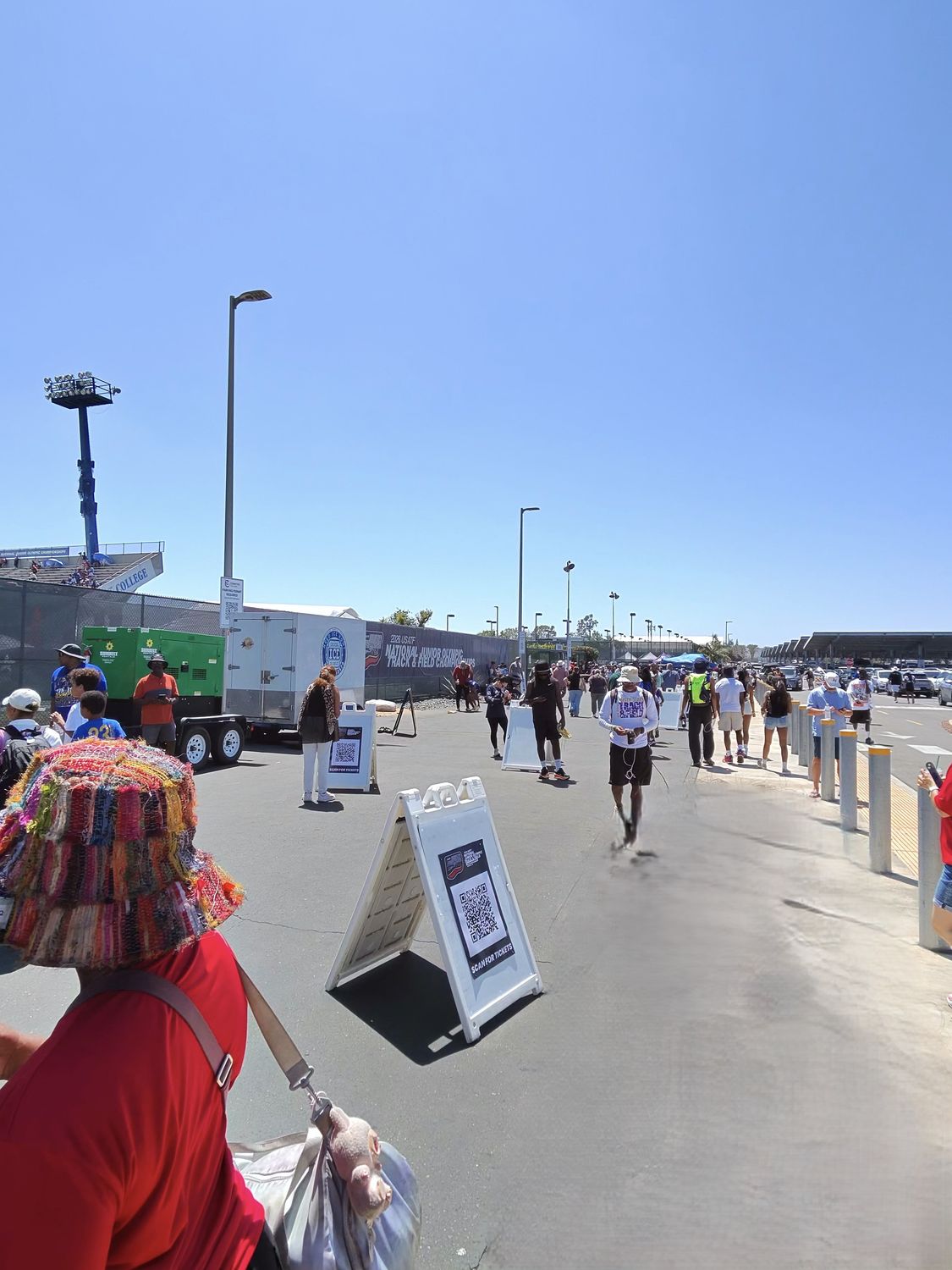
Left: Sponsor and media partner signage outside the venue. Right: The USATF Code of Conduct posted at the entrance — read the venue rules before you go.
Seating is very unique. When you get into the stadium, a lot of people have tents set up. Depending on the stadium you're going to and if it's USATF sanctioned, you may want to look up the code of conduct and the house rules. Sometimes tents are not allowed, sometimes they are.
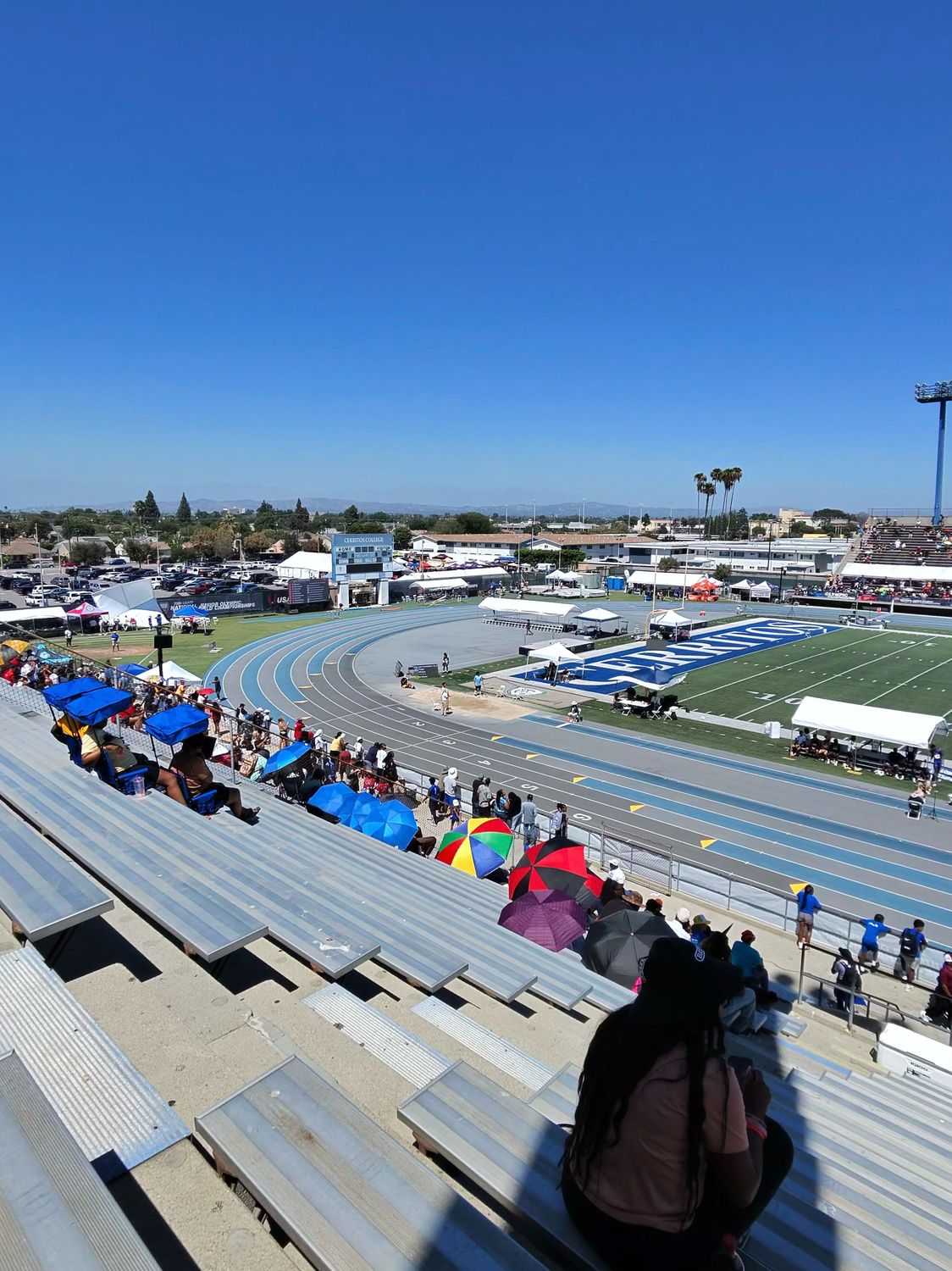
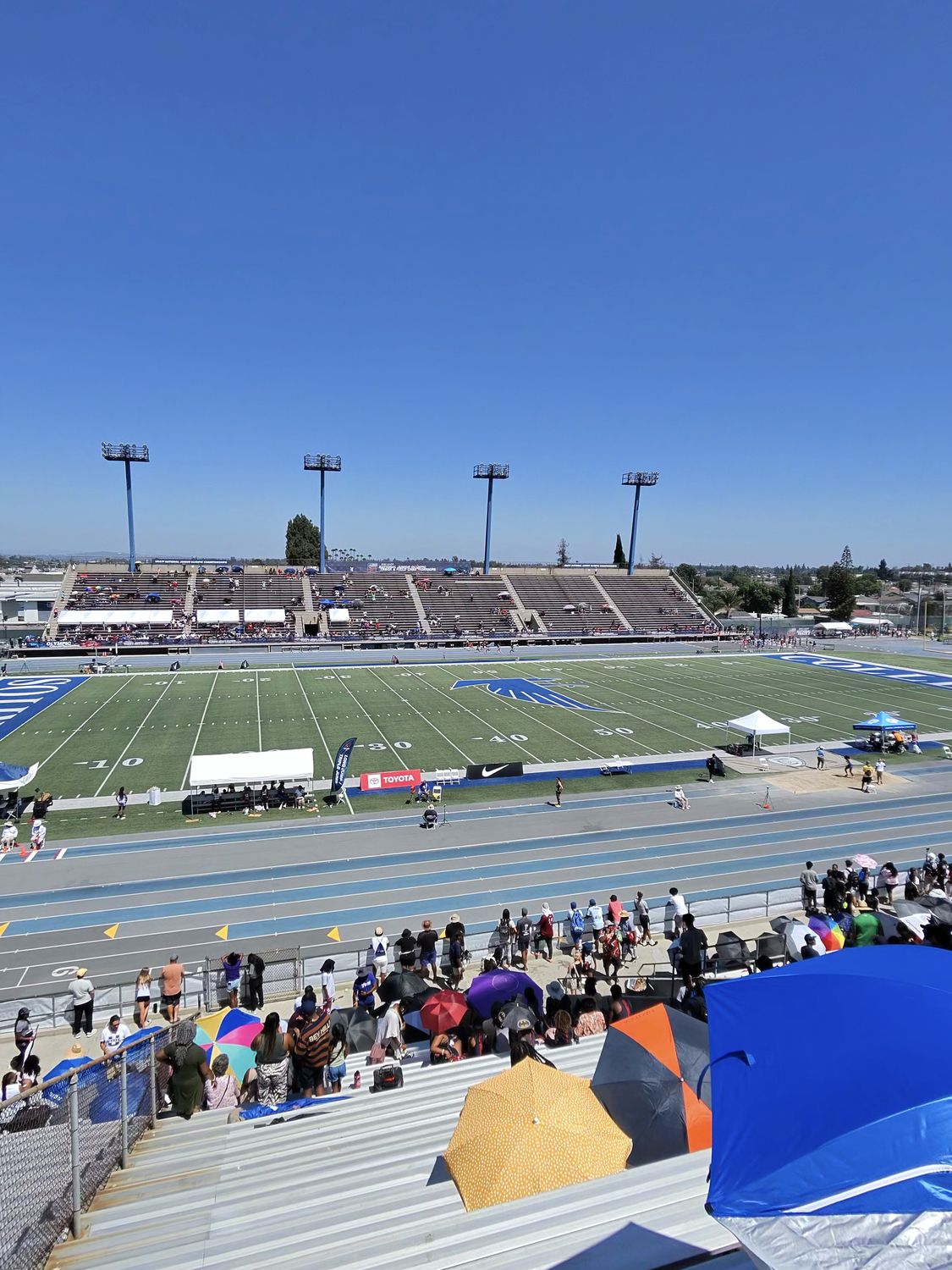
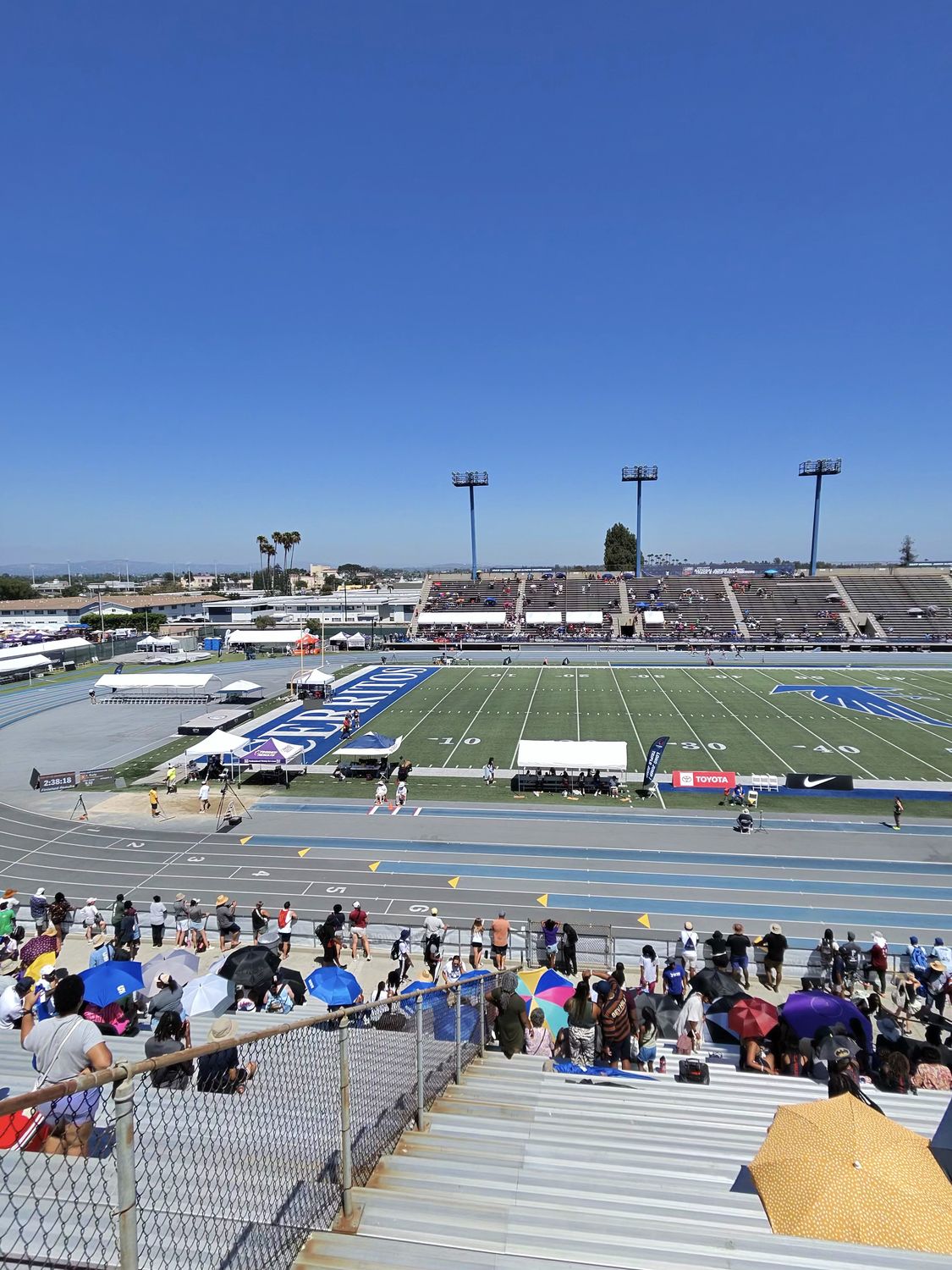
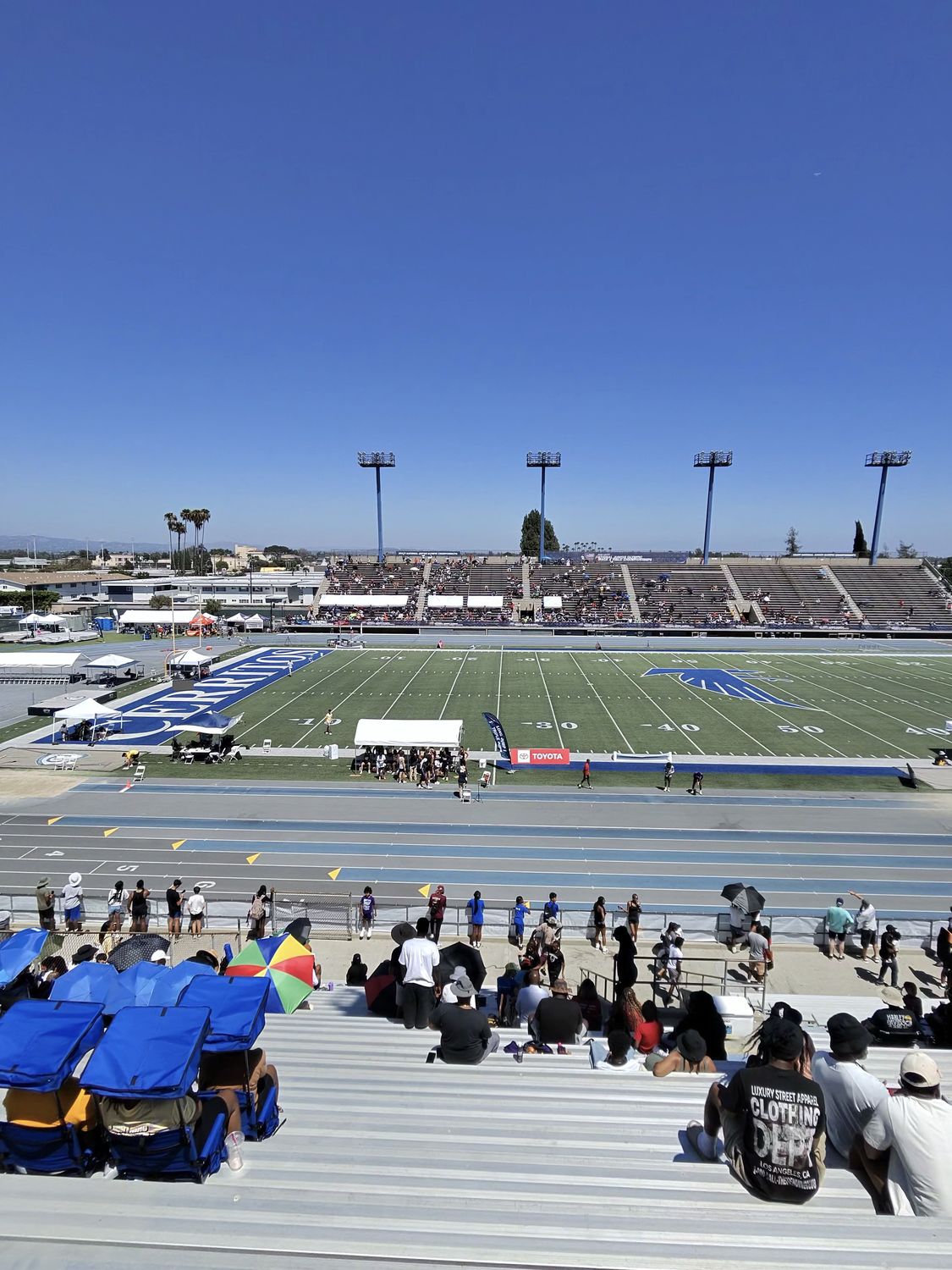
A lot of people use bleacher cushions with coverings if they need shade. As you can see in the pictures, a lot of people use umbrellas with UV protection. Regular umbrellas will not provide enough protection, so you may want one specifically rated for UV. Sometimes people just put on a lot of sunblock and handle the direct sunlight, but that's personal preference.
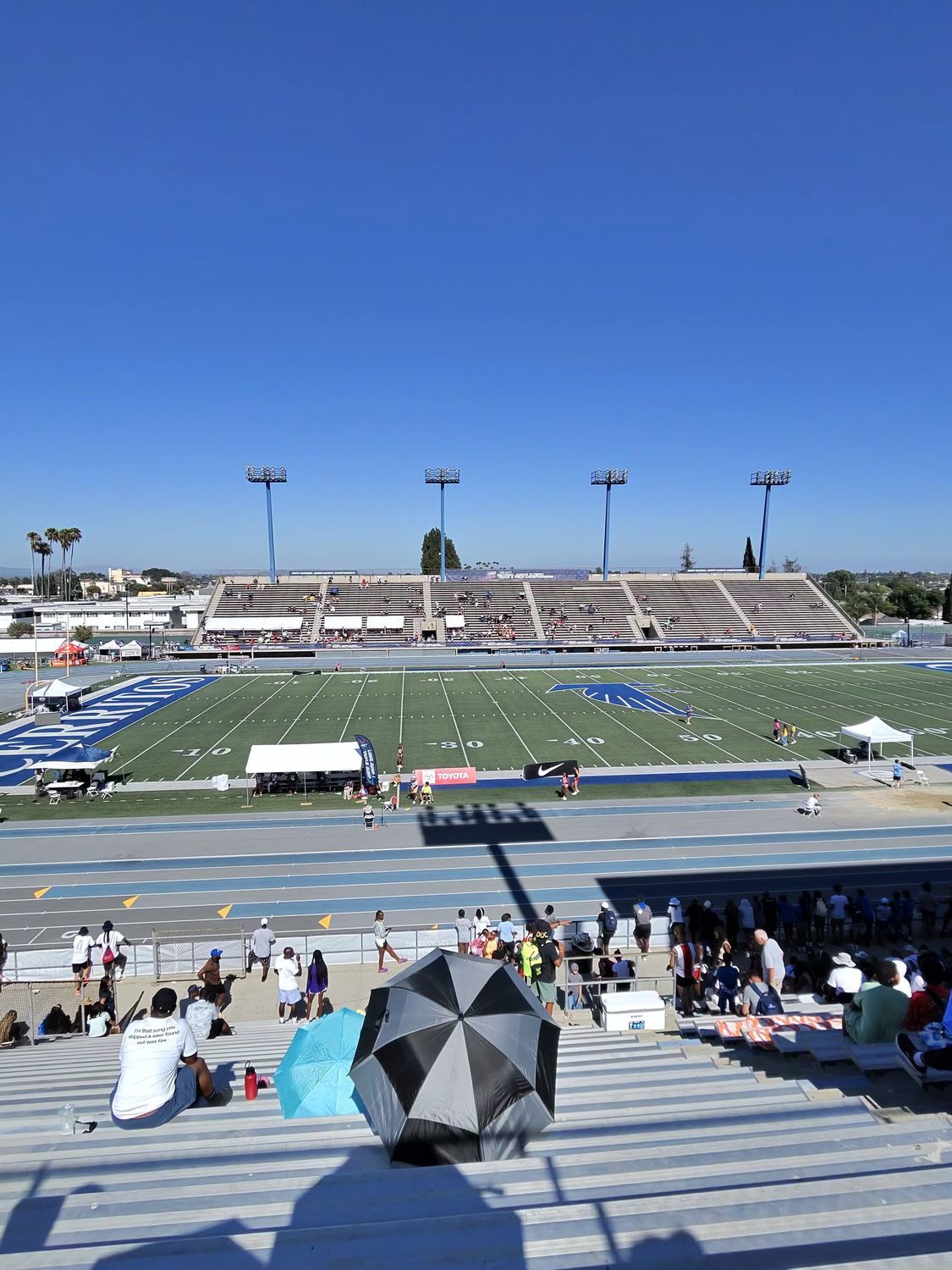
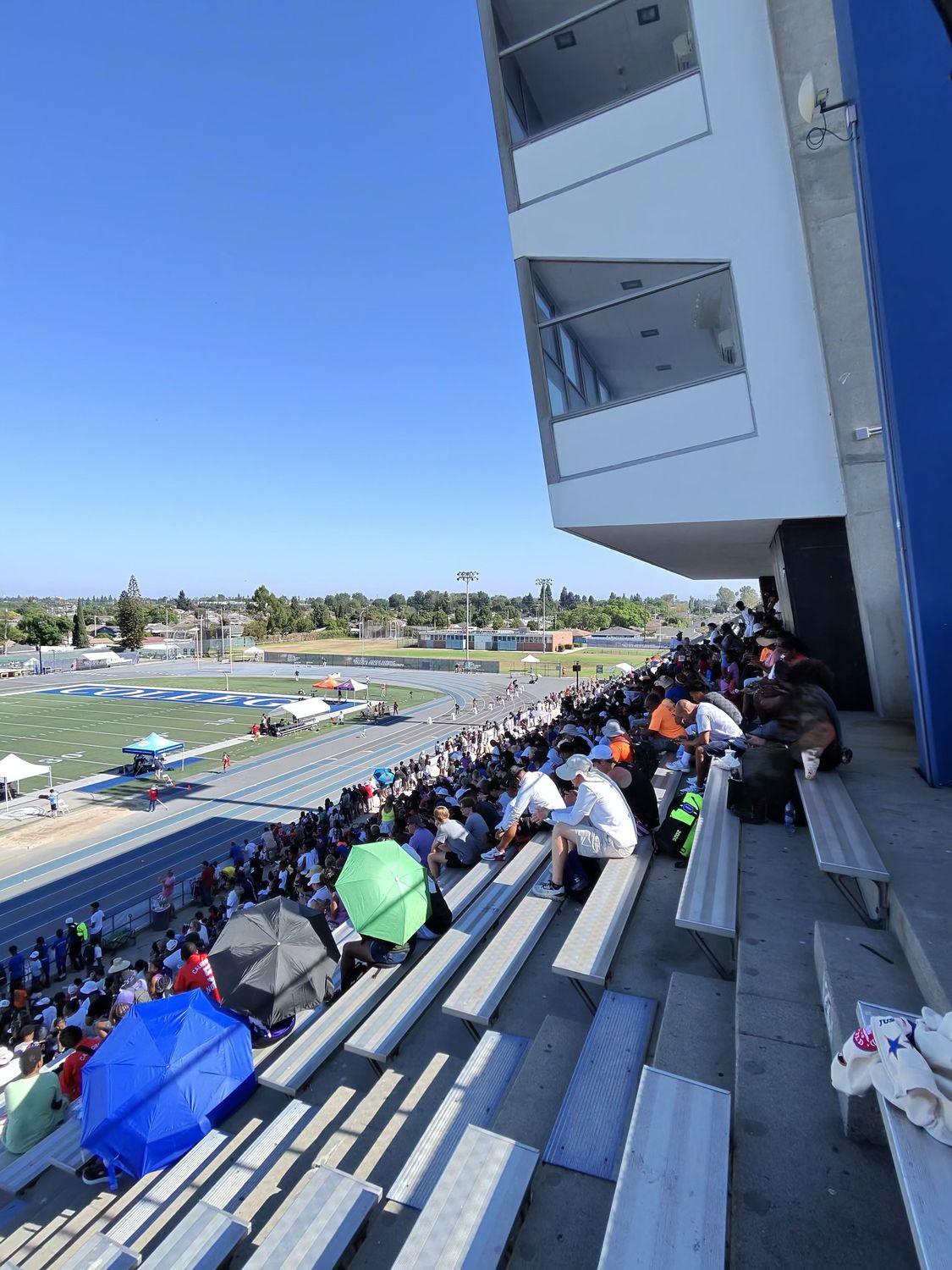
When you get in there, a lot of people like to sit together with their team. If you're an individual and you just want to support someone, you're welcome to sit anywhere. The starting line and the finishing line areas are always a little congested, so if you want to be away from that, keep it in mind. Before you sit down, try to get your bearings and figure out where the finish line is, especially if you're videotaping or taking pictures of your athlete.
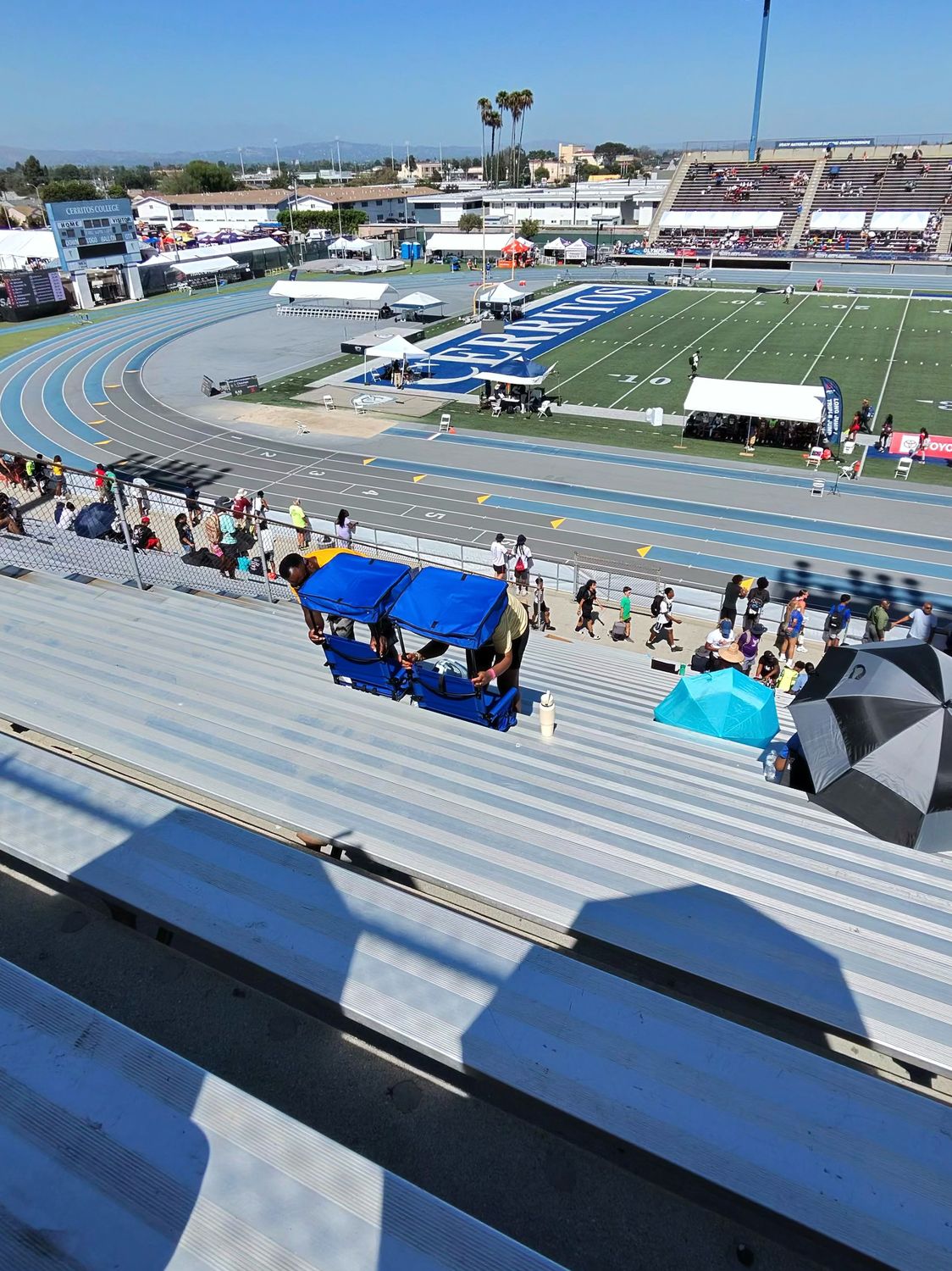
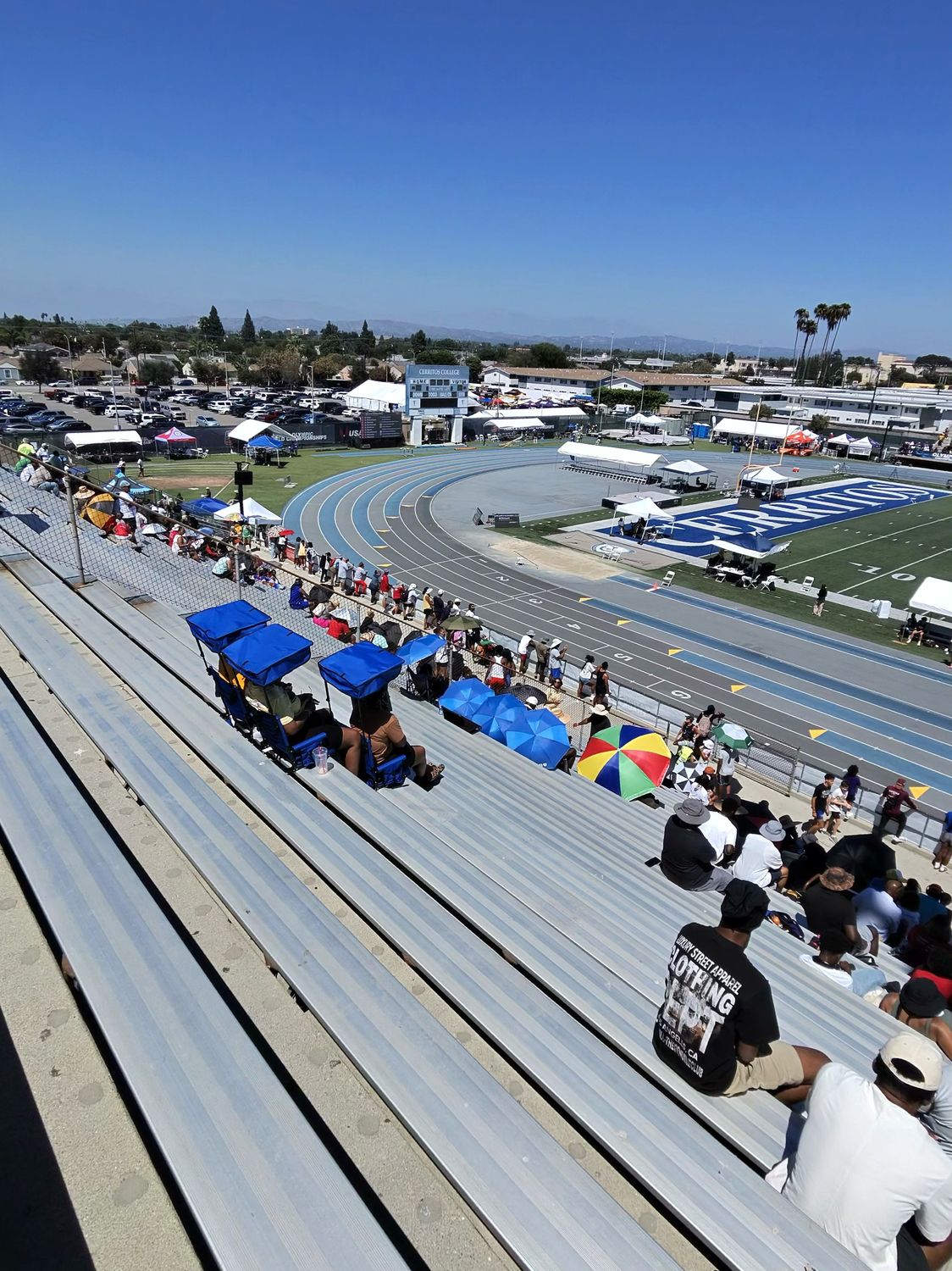
We like to sit on the top so we can get a full perspective and catch a little bit of wind if there's any up there. But when the race is about to happen, we like to go down by the finish line to catch the end. It's all preference for seating. There's no designated seating at most meets.
For the Junior Olympics specifically, they do have preferred seating. You can pay for seats by the finish line. It's a bit of an upgrade, and the price may change by the time you read this, so it's worth looking into if that's important to you.
Sunblock
Some people need sunblock really bad. Others don't. But be prepared to get hit by the sun hard. Even if you have a UV umbrella or UV shade, sunblock may still be needed because the rays are going to get to you regardless. You're out there in the sun all day. Three, four, five hours, six hours, seven hours. I've been out there nine hours before waiting for different heats to finish.
I recommend taking breaks every couple of hours to go into the shade, get hydrated, and regroup. Get your flask, get your water, get your drinks. If you can bring a cooler, get hydrated and then get back out there. The heats are in sequence and you can track each one, but definitely be ready with sunblock. It's a must for most people.
Shade
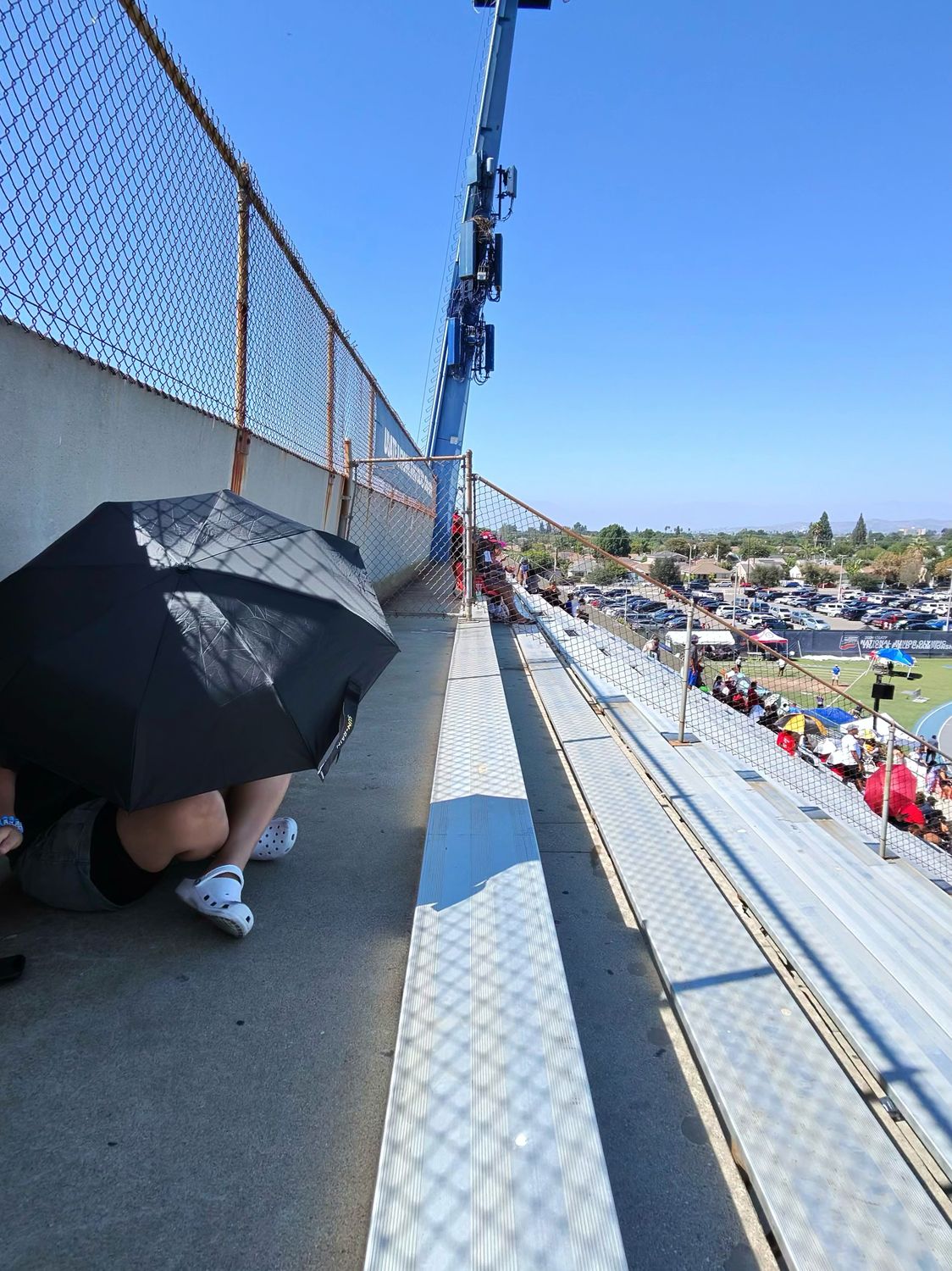
In the bleachers and in the stadiums, it's hard to find shade, so bring your own. I cannot emphasize it enough. Whether it's a bleacher cushion seat with a built-in shade, a UV protected umbrella, or a UV protected tent if the meet allows it, shade is important. You don't want to get heat stroke. You don't want to have heat issues. You want to be ready to support your athlete and not have any medical issues.
Refreshments
For the Junior Olympics, they have a lot of refreshments. They have food trucks that come along. They have people walking through the bleachers offering refreshments and snacks. If you want to save money, what I do is bring a little cooler. We put some drinks in there, some snacks, nothing that's too filling for our athlete or too tempting. Just little refreshments, maybe an energy bar or some fruits, a banana for after the run. That cooler can go a long way. It'll save you a good penny.
But if you want to help support the local businesses or try the new foods, you can do that. If you're traveling from out of state, oftentimes they have good foods at the local food trucks and an abundance of different refreshment items for you. Otherwise, I'm a bit frugal. I like to look for the best ways to save money, so I bring a cooler, my little bleacher seat, and my UV umbrellas and we're good.
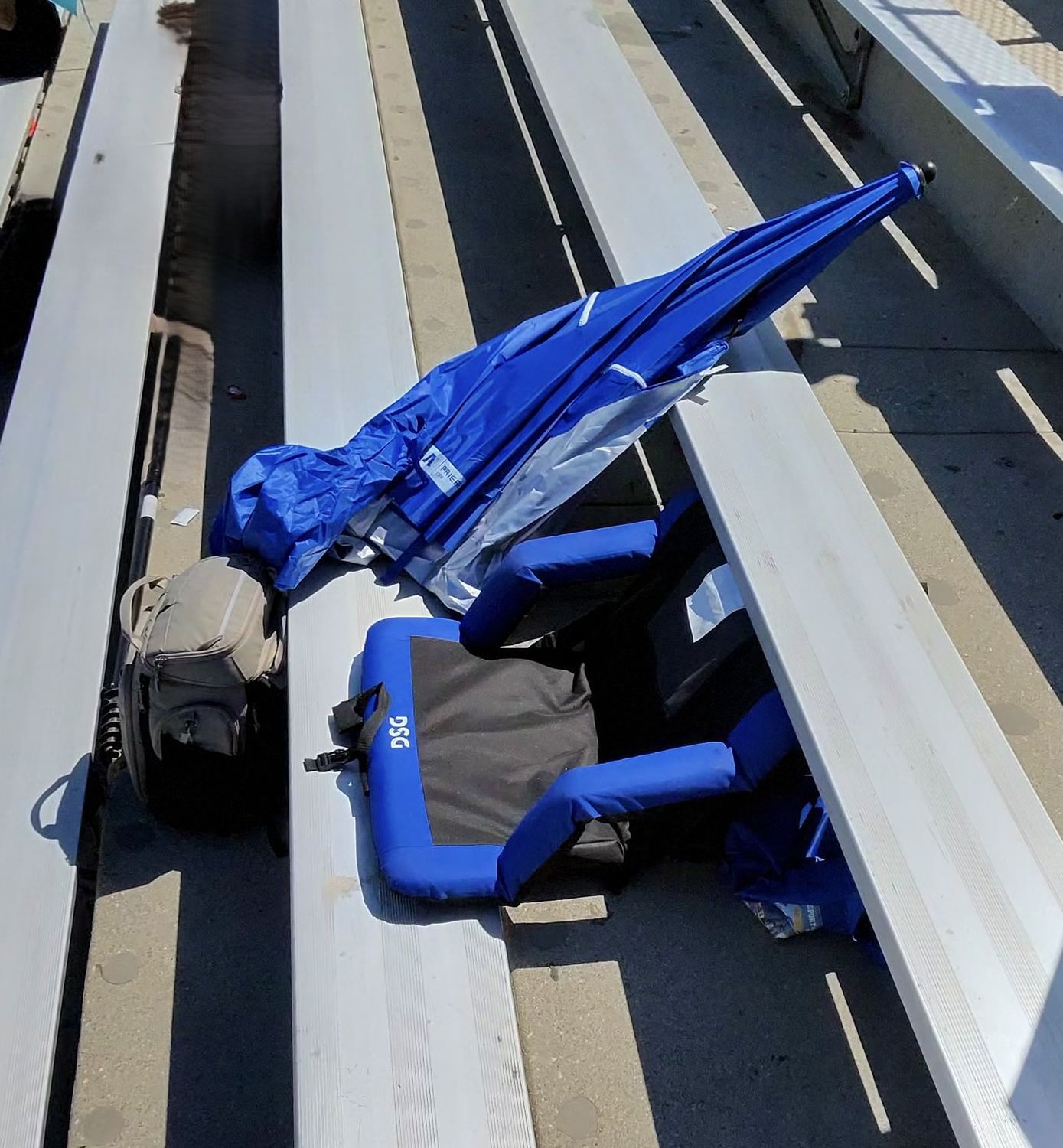
From the solo perspective, that setup works great. When the whole family comes, we use a UV protected tent and a larger cooler with our refreshments.
Electronics
For this section I'm referring to two things: storage and battery life.
Storage meaning if you're taking a lot of pictures, you may want to bring backup SD cards or make sure you've backed up your phone so you have lots of storage space. You don't want to miss that one moment where your athlete makes a personal best and you didn't get it on film. Or they hit a record and you didn't get a picture. I like to clear space on my phones and all my devices before I go to the meet. I double check before I get there so that at the last second I don't run out of space.
For battery life, I like to use a backup battery pack with over 20,000 milliamps. You can charge two phones at once, fast charge and slow charge. It is an essential tool if you want to document your athlete's performance that day.
Athlete's Perspective
Being that I'm not the athlete who is performing, I can tell you from secondhand experience with our athlete. When they get there, they're focused. They're looking at all the other competition and they're getting into the zone and going into the warm-up area. Their mind is basically thinking about running and that's it, or whatever event they're participating in.
Even team members, same thing. They may chat a little bit here and there, but from the athlete's perspective it's awesome to witness them talking with other athletes, meeting other athletes, competing with other athletes. Although the competition is still fierce, it's friendly in a lot of senses. You're meeting people from all around the nation for the Junior Olympics, from New York to Hawaii. It's really cool to see.
The main thing is when you get there, you get the athlete to the warm-up section so you can meet the coach and be run ready. When they check in with their coach, they have to be run ready or performance ready, whether they're throwing discus or whatever it may be. They have to be ready when they check in.
We use a flask, give them their shoes and a flask, and they take their phone. There's a little area where they can store their phone, and it's pretty safe. They have a lot of police around guarding the area, so they don't have to worry about someone taking their phone or personal items. Our athlete takes a flask, his cleats, his regular sneakers, and foam, and that's it. He's ready to run.
When you get there with your athlete, make sure they're run ready. Then basically they're like gladiators preparing to go into the arena. Once they get to the check-in area, they have to be run ready.
Race Ready Entry Point
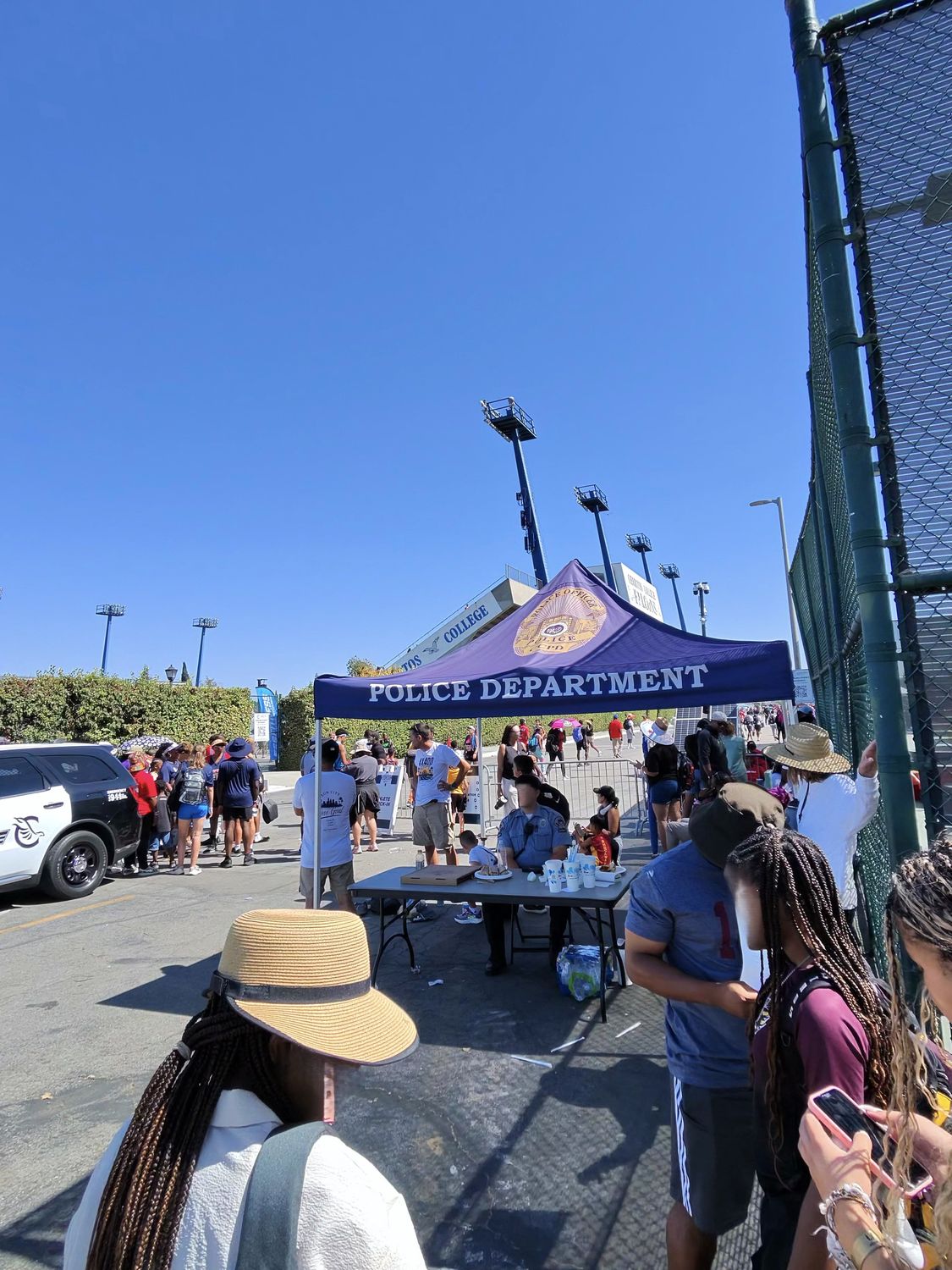
This is a photo of the race ready entry point I mentioned above. You'll notice it's by the police and security as well. If your athlete is younger and you want to have them check in with the coach, that's a great idea. There's a lot of police around, a lot of security around. It's reassuring to hand over your athlete to the coach and know that there's police around, lots of security, and even drones monitoring the area.
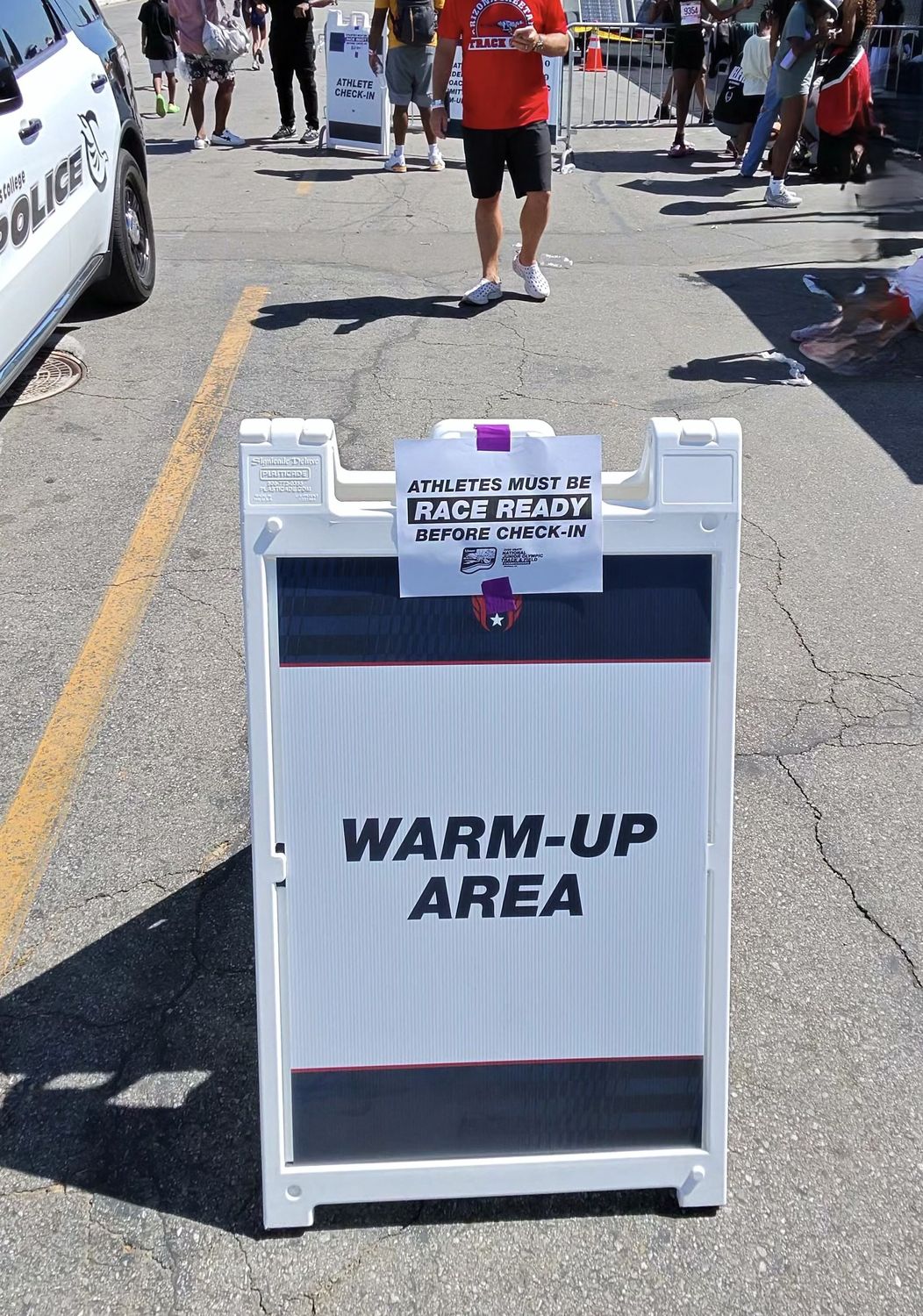
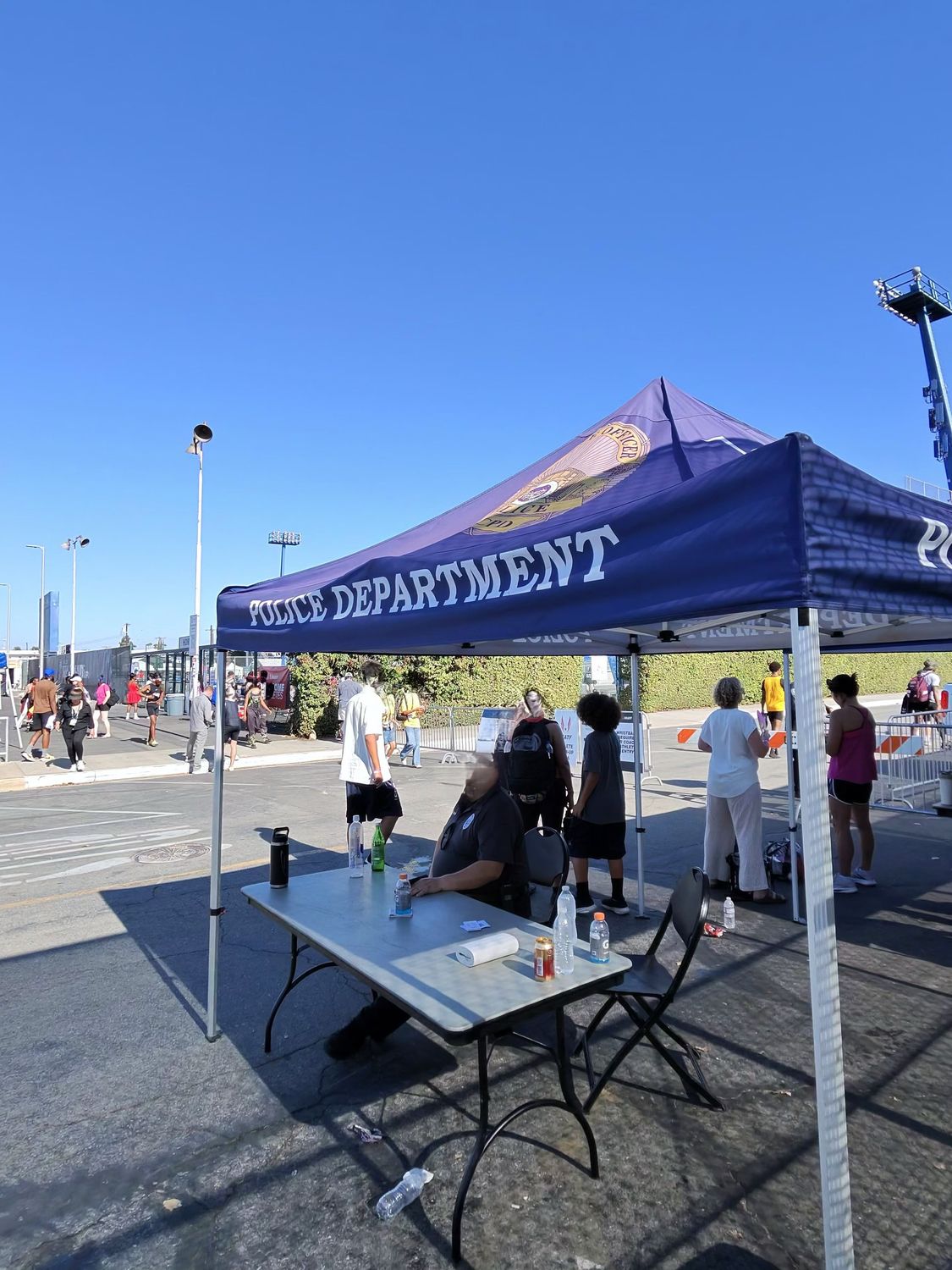
Left: The "Race Ready" sign at the warm-up area entry. Right: Police Department presence at the main entrance.
Warm-Ups
This is the area where the warm-ups happen. They use the adjacent fields in most cases to get the athletes out there, warmed up, and acclimated before they step onto the field and compete.
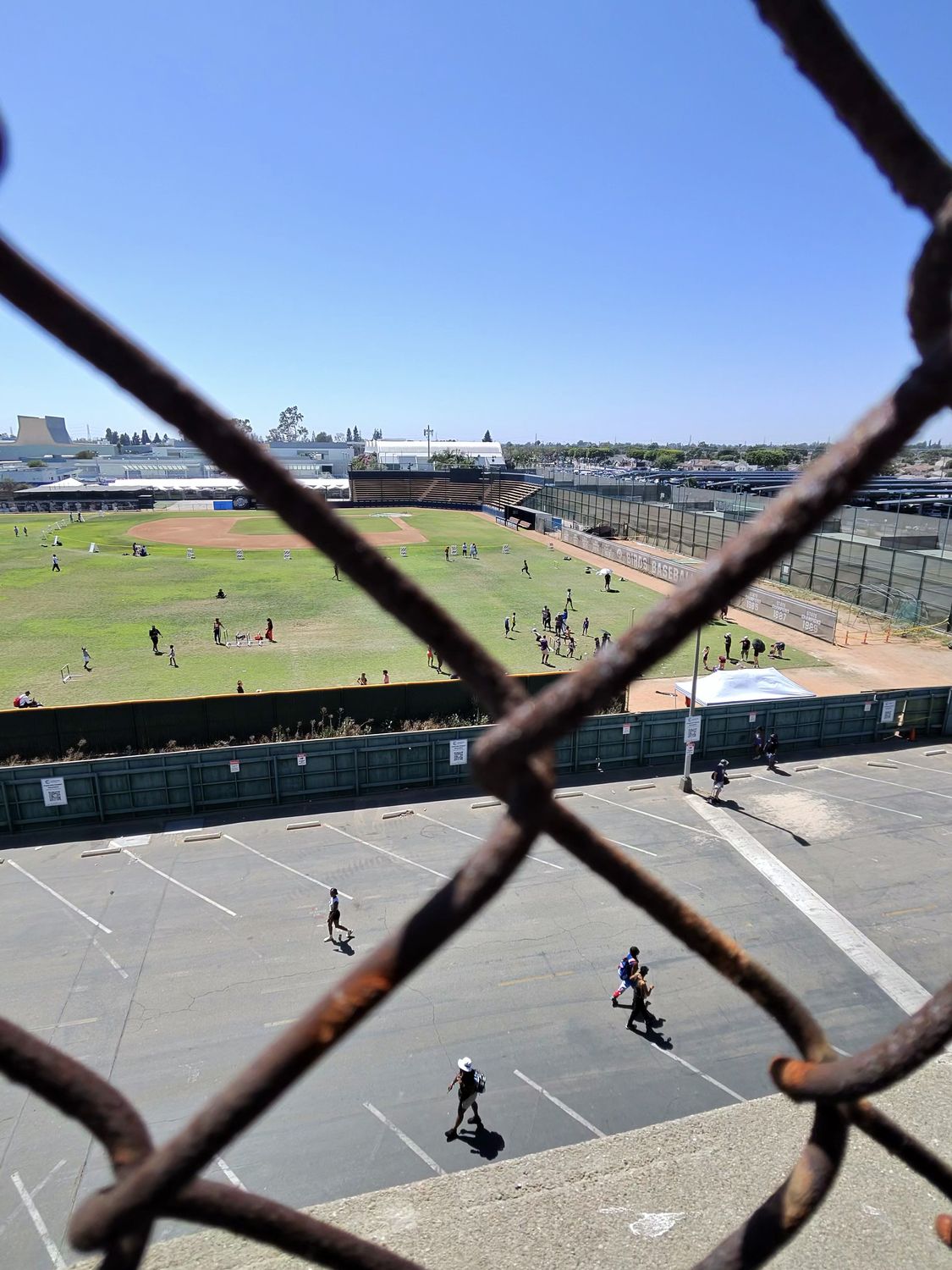
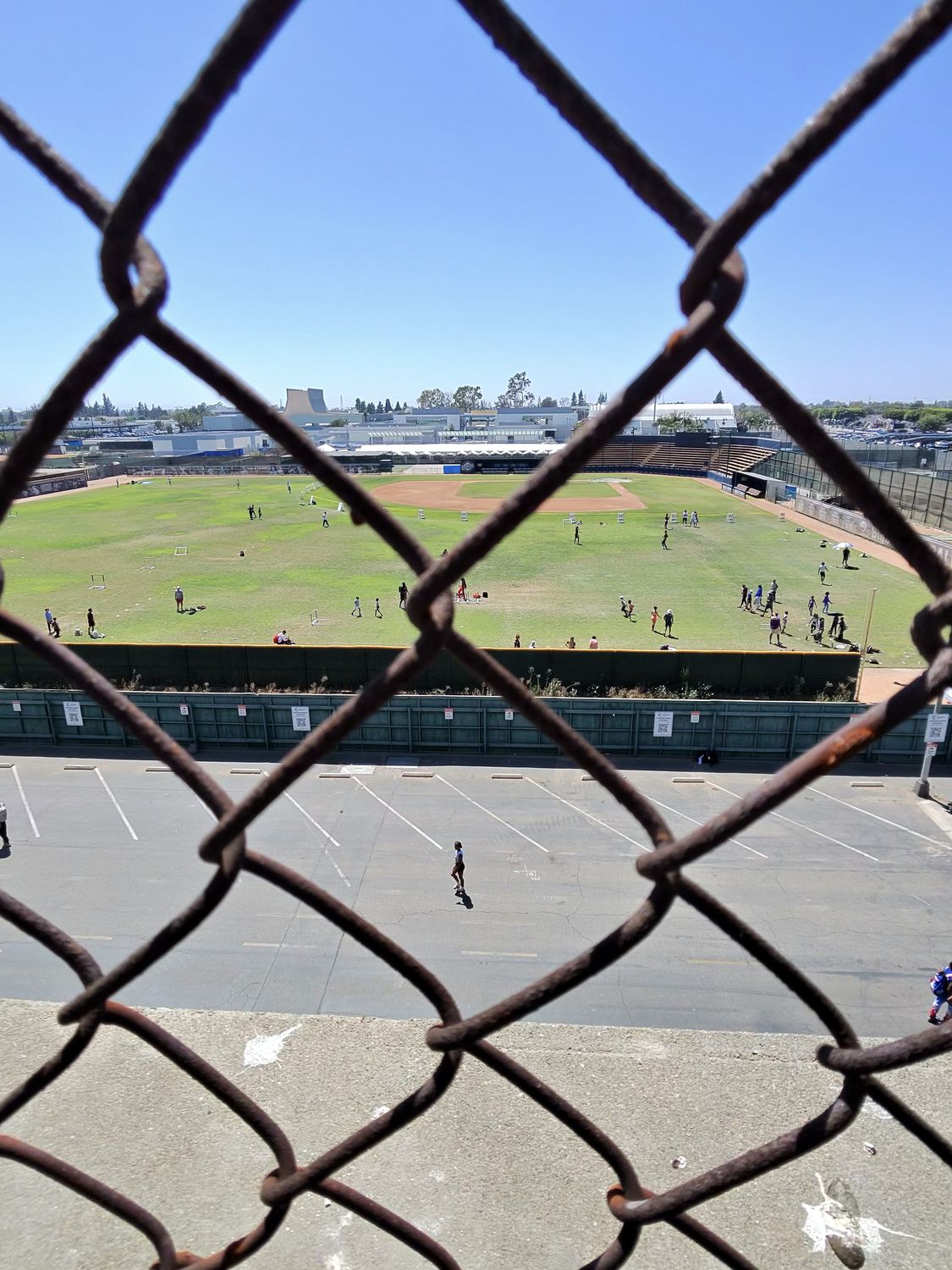
The warm-up fields adjacent to the main stadium where athletes prepare before their events.
Acclimation
If your athlete has not been acclimated with the environment, the weather, or the altitude, it may be a good idea to get there early. If your coach has not already told you to go to the track before the meet to get them acclimated with the climate they're racing in, consider doing it on your own.
I've seen athletes out there from Hawaii arriving two or three days before, just getting out there, getting their lungs ready. I've seen athletes from Texas, from New York, from Pittsburgh all in California getting acclimated two or three days before the race. It's a good thing to do. Acclimation is important.
Pre-Race Staging
As the heats continue and progress, normally they go youngest to oldest, and there's a pre-race staging point. At the staging point, you'll see your athlete starting to line up. At that point, you can go to the finish line, the starting line, wherever you prefer.
Being aware of where the staging point is matters. If you can see it, you can watch them walk out. Once they get on the track, it moves pretty quick from heat to heat. So being aware of your pre-race staging point is important.
Gear and Personal Items Holding Area
As mentioned before, the gear and personal items holding area in the warm-up and staging area is pretty secure. There's drones flying over, there's security and police presence. If your athlete is concerned about their phone or their personal items, their flask or their shoes, it is a good idea to make sure they're mindful of it. But the competitors and athletes are very respectful of each other in that sense. They don't touch each other's stuff.
When we were there, I haven't seen it happen. I've seen people leave their bags, purses, watches, phones, and people come back looking for them and they're right where they left them. It's like a community of family. Everybody supports each other as athletes, supporters, and family members.
From your perspective as a supporter, once their heat is over, they're going to go right back to their phone. They can see where you're at, or they can call you and say "let's meet up, give me some water" or "give me a snack between the next heat." That's how it works.
The Race
When the race or event happens, it's fast. Normally you want them to be record-breaking fast if possible. Once they start the race, enjoy that moment. Depending on the tournament or the heat, normally the results post fast, either right there at the venue or online at Athletic.net.
Once the race starts and finishes, you can see the results quickly. That's the most exciting point. This is the moment you waited for, your athlete waited for, and trained for. It's at that moment that you can celebrate their performance. It's an amazing thing to witness, an amazing thing to be a part of. We really appreciate our athletes. It's just awesome to witness it and be able to support them.
Reunification with Family
Once the race is complete, they go back to the warm-up area. Ideally if they have a phone, they can call you and then reunify with you. This is especially important if you have younger children competing or younger athletes. If you want to get close to them and take pictures or hug them and show them love and support, the key is knowing where their phone is in the staging or warm-up area, and then getting back to you.
I would recommend texting the coach, saying something like "I've got my athlete with me now, thank you coach." Mind you, the coach is doing seven, eight, nine, ten different things at the same time: checking results, checking with other parents, checking with officials, making sure everything is where it's supposed to be, making sure everything is fair. The coaches have a lot going on. But a little text saying "I have so-and-so with me now" can go a long way in supporting your coach.
Traffic and Planning Ahead
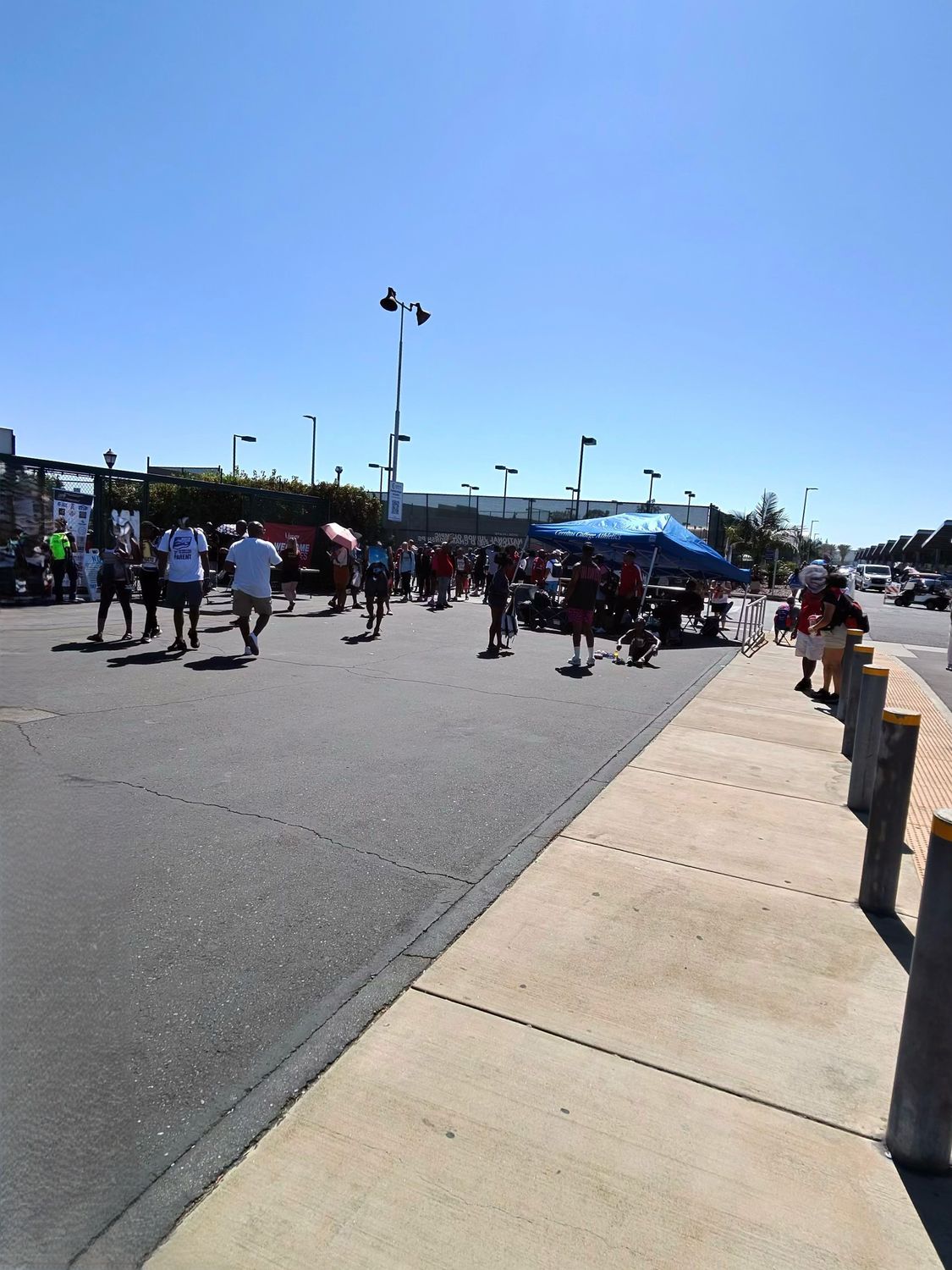
And lastly, traffic out. When you leave with your athlete after you've spent the day supporting them, when you leave, what we like to do is get away from the front entrance, as far away as possible. There's a lot of people coming out, and a lot of kids, sometimes really small kids, will jump out between cars looking for their car to get out of the sun.
We like to get as far away as we can from the front entrance and try to go opposite the direction of the traffic to get out of the area as soon as possible. That's our strategy. Other people have different strategies. Some people don't mind sitting in the traffic and waiting until everyone has filed out. But we try to go the opposite way. Whichever method works for you is great, but just be ready for traffic when you're going in and when you're going out.
We hope you found this information helpful. If you have any questions or anything you'd like to add, please let us know. If you have any track clubs you'd like to recommend or send our way, submit your club here so everybody can have a single source of information. In addition to Athletic.net, it's nice to have a source of information that we can all share to help get your athletes out there exercising, having fun, competing, and enjoying track and field.
If you are looking for a club, start with our guide to choosing a track club — it covers coaching credentials, fees, and red flags to watch for. Not sure if a track club or running club is the right fit? We break down the differences in our track club vs running club comparison.